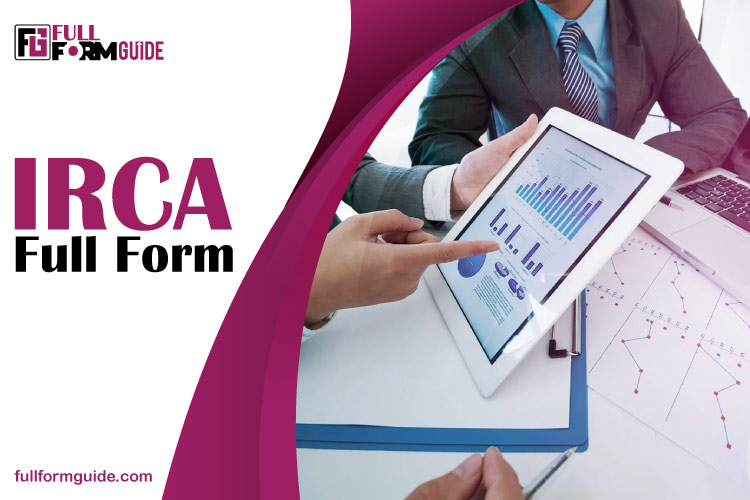
The IRCA full form is International Register of Certified Auditors, a globally recognized organization that certifies professionals in auditing, quality management, and related systems.
It ensures that auditors and quality professionals meet international standards through proper training and accreditation. For individuals working in management systems, certification from IRCA is considered a mark of professional excellence and global credibility.
Since its creation, IRCA has played an essential role in promoting competence, ethics, and consistency in auditing practices. It helps businesses maintain compliance with ISO standards and ensures that certified auditors possess the right skills to perform evaluations effectively.
Understanding the IRCA Full Form and Its Global Impact
The IRCA full form, International Register of Certified Auditors, represents one of the world’s most trusted professional bodies for quality assurance. Established in 1984, it operates under the Chartered Quality Institute (CQI), based in the United Kingdom. The organization’s goal is to improve global business quality by providing professional recognition to qualified auditors.
Auditors certified by IRCA work across multiple industries, including manufacturing, healthcare, construction, food safety, and environmental management. They help organizations evaluate their processes, identify gaps, and ensure compliance with international standards like ISO 9001 (Quality Management System) or ISO 14001 (Environmental Management System).
By maintaining a global database of certified auditors, IRCA ensures employers can trust the credibility and competence of the professionals they hire. It has become a benchmark of quality assurance in both national and international markets.
Why IRCA Certification Matters
Becoming IRCA-certified offers significant advantages for professionals and businesses. For individuals, it demonstrates expertise, professionalism, and commitment to quality management. For organizations, employing IRCA-certified auditors ensures accurate assessments and compliance with global standards.
An IRCA-certified auditor is trained to identify risks, improve efficiency, and verify that management systems align with international requirements. This process helps businesses maintain consistency, reduce waste, and achieve customer satisfaction.
Additionally, IRCA’s certification adds international value to an auditor’s career. It opens doors to global job opportunities, consulting projects, and professional growth. Many companies around the world prefer working with IRCA-registered professionals because their skills are tested and verified by a respected institution.
How to Become IRCA Certified
To gain IRCA certification, a professional must complete a recognized training course approved by the Chartered Quality Institute. The training covers key areas such as auditing techniques, process improvement, communication skills, and ethical conduct. After completing the course, individuals must pass an examination and demonstrate practical auditing experience.
Once certified, auditors are added to IRCA’s official register, making their credentials visible to employers and organizations globally. The certification remains valid for a specific period, after which professionals must renew it through continuous learning and professional development. This ensures that auditors stay up to date with changing standards and practices.
IRCA’s Role in Improving Business Quality
IRCA’s contribution goes beyond certification. It promotes a culture of continuous improvement by setting guidelines for auditing best practices. These standards help businesses identify weaknesses in their processes and take corrective actions. As a result, companies improve their performance, meet regulatory requirements, and maintain a strong reputation.
Through collaboration with international organizations and industry experts, IRCA updates its programs regularly to match evolving business trends. It also supports initiatives that promote sustainability, digital transformation, and risk-based thinking in quality management.
By fostering these principles, IRCA helps organizations move from mere compliance to true excellence, where quality becomes part of their identity rather than a box-ticking exercise.
Global Recognition and Influence
The reach of IRCA extends across more than 150 countries. Thousands of professionals and training providers operate under its guidelines. Its association with the Chartered Quality Institute adds credibility, making it one of the most respected auditing authorities worldwide.
Many multinational companies include IRCA certification as a requirement when hiring auditors or consultants. The reason is simple — it provides assurance that the individual has undergone rigorous training and adheres to ethical standards.
Over the years, IRCA’s influence has helped improve the reliability of audits and the integrity of international trade. It has encouraged transparency, fairness, and accountability in business practices, which are essential for building trust in today’s competitive environment.
Conclusion
The IRCA full form, International Register of Certified Auditors, stands as a global symbol of professionalism, reliability, and integrity in the field of auditing. It ensures that auditors are qualified, ethical, and committed to maintaining high-quality standards.
For businesses, IRCA represents confidence; for professionals, it represents growth. As industries continue to evolve, IRCA remains a key driver of quality assurance worldwide — empowering organizations to achieve excellence through trust, skill, and continuous improvement.