
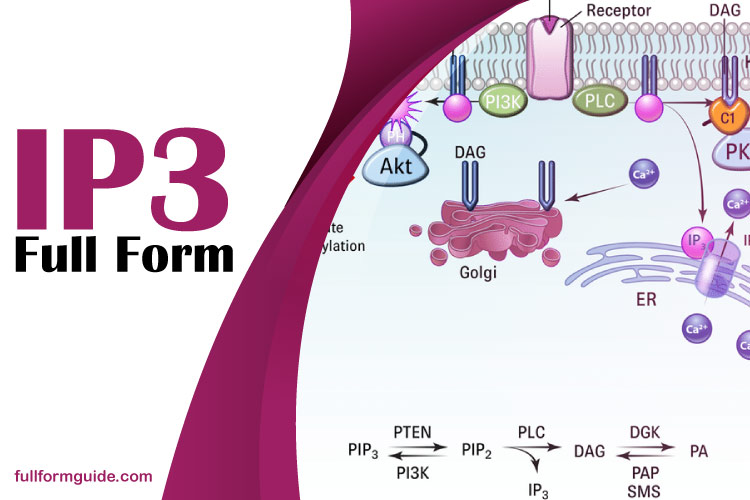
The IP3 full form is Inositol Triphosphate, a critical chemical messenger found in living cells. It plays a vital role in cell signaling, helping cells communicate and respond to external signals such as hormones, light, or neurotransmitters.
IP3 works by triggering the release of calcium ions (Ca²⁺) inside the cell, which then activate various biological functions including muscle contraction, metabolism, and brain activity.
In simple terms, IP3 is like a cellular switch — it carries messages from the outside of the cell to its inner components, ensuring proper coordination of life processes.
How IP3 Works in Cell Signaling
IP3 is produced when a signal molecule binds to a receptor on the cell membrane, activating an enzyme called phospholipase C (PLC). This enzyme splits a lipid called PIP2 (phosphatidylinositol 4,5-bisphosphate) into two parts:
- DAG (Diacylglycerol)
- IP3 (Inositol Triphosphate)
Once formed, IP3 travels through the cell’s cytoplasm and binds to receptors on the endoplasmic reticulum (ER). This causes calcium ions stored inside the ER to be released into the cytoplasm, leading to a chain reaction that activates specific cell responses.
Functions of IP3 in the Human Body
IP3 is essential for a wide range of physiological functions, including:
- Muscle Contraction: It helps muscles tighten and relax through calcium control.
- Hormone Secretion: Regulates the release of hormones like insulin and adrenaline.
- Neurotransmission: Supports brain signaling and nerve impulse transmission.
- Cell Growth: Influences how cells divide, grow, and repair themselves.
Without IP3, many internal body functions would fail to respond properly to external stimuli.
IP3 Full Form in Other Contexts
While Inositol Triphosphate is the primary and scientific meaning of IP3, the abbreviation IP3 can also stand for other terms in different domains:
- Internet Protocol version 3 – an experimental early version of the internet protocol, replaced later by IPv4.
- Independent Power Producer Phase 3 – in energy projects, used to describe stages of independent power generation.
- Intelligence Preparation Phase 3 – a military term referring to an analysis stage of operational planning.
- Industrial Process Phase 3 – in engineering, indicating the third phase of a process or test cycle.
However, in scientific and educational contexts, Inositol Triphosphate remains the most accurate and widely used full form.
The Connection Between IP3 and Calcium Signaling
Calcium is one of the most important messengers in cells, and IP3 directly controls its movement. When IP3 binds to the IP3 receptor on the endoplasmic reticulum, it opens calcium channels that release Ca²⁺ into the cytoplasm.
This rise in calcium concentration acts as a signal for:
- Heartbeat regulation
- Hormone release
- Brain activity synchronization
- Enzyme activation in metabolism
After the signal is complete, the calcium is pumped back into the ER to reset the system for the next message — showing how precisely IP3 helps maintain balance in the cell.
Why IP3 Is Important in Medical Research
Scientists study IP3 because abnormal signaling can lead to several health conditions such as:
- Heart disorders (irregular heartbeat or high blood pressure)
- Neurodegenerative diseases (like Alzheimer’s and Parkinson’s)
- Cancer cell growth (due to overactive calcium signaling)
- Metabolic disorders (affecting insulin release and energy use)
By understanding IP3 pathways, researchers can develop drugs that target these issues more accurately.
Discovery and Historical Background
The molecule IP3 was discovered in the early 1980s by British biochemist Michael Berridge, who found that certain hormones triggered calcium release through this compound. His discovery changed the understanding of how cells use chemical signals to communicate, forming the foundation of modern cell biology and pharmacology.
Future Role of IP3 in Biotechnology
Modern research is exploring how IP3 can be used in drug design, gene therapy, and nanomedicine. By controlling IP3 pathways, scientists hope to design medicines that precisely regulate calcium signaling in diseased cells without affecting healthy ones.
This makes IP3 not just a messenger but also a key to future innovations in health and biotechnology.
Conclusion
To conclude, the IP3 full form, Inositol Triphosphate, represents one of the most crucial molecules in cell communication. It acts as a messenger that triggers calcium release and regulates countless body functions — from muscle movement to hormone control.
While IP3 can have other meanings in technical or industrial contexts, its biological definition remains the most important, symbolizing the complexity and precision of life at the cellular level.