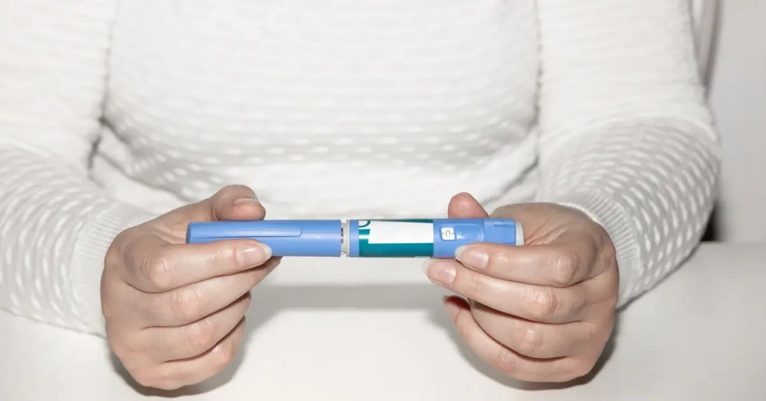
Product illustration.
“Brighter skin” sounds like one goal. In practice, a person may mean less dryness, fewer visible dark patches, a smoother surface, or a complexion that looks less tired. Those are different concerns, and a product becomes much easier to understand when its formula is connected to each one.
Rejuran Tone-Up Booster brings together a hydration and conditioning component with a second group of ingredients associated with tone-focused skincare. Its appeal is therefore the combination: it is not simply another hyaluronic acid product with a brightening name. PharmaResearch identifies six principal ingredients across the two components, including c-PDRN, hyaluronic acid, panthenol, ascorbic acid, glutathione, and tranexamic acid.[1]
Understanding that combination helps answer the questions customers actually ask. What might it add beyond a moisturizer? Is it the same as injectable Rejuran? Does “tone-up” mean immediate whitening? And which changes would count as a useful result?
Why dryness and uneven color need different ingredients
Consider two descriptions: “My skin feels tight and looks flat by the afternoon,” and “My skin feels comfortable, but the dark patches remain.” Both customers may ask for radiance, yet they are describing different priorities. The first conversation centers on moisture and surface appearance. The second centers on pigmentation and its cause.
Tone-Up Booster’s formula spans these concerns, but a combined formula does not make them interchangeable. A complexion can look fresher while individual marks remain visible. Likewise, a change in the contrast of a dark patch does not necessarily mean the skin feels more comfortable. Treating all improvement as “glow” makes it difficult to know what a product has actually contributed.
This distinction explains the two sides of Tone-Up Booster. Moisture-focused ingredients address the condition of the surface, while the tone-focused group adds a different reason for considering the formula. A product that includes both is relevant to the overlap between these concerns, rather than treating every dull complexion as a pigment problem.
Persistent or changing discoloration also deserves an explanation beyond a cosmetic label. A professional assessment can distinguish concerns that look similar in a photograph. The product name should not be used as a diagnosis, and “tone-up” should not become a promise to erase every type of pigmentation.
How HA panthenol and c-PDRN contribute to the formula
Hyaluronic acid is the clearest link to hydration. It is a water-binding polysaccharide: a molecule built from repeating sugar units. Its role in skincare is connected to retaining moisture, rather than supplying an exfoliating acid. In a study of HA-containing creams, Pavicic and colleagues found improvements in skin hydration and elasticity with the formulations tested.[2] This explains why HA belongs in the conditioning side of a tone-focused formula.
Panthenol complements that moisture-focused role. Gehring and Gloor’s human study of topical dexpanthenol found improved hydration of the outer skin layer and reduced water loss with the tested preparations.[3] This is a useful reason to take the conditioning ingredients seriously: a tone-focused formula need not be judged only by its most fashionable active.
c-PDRN connects the product to Rejuran’s DNA-derived skincare identity. PDRN stands for polydeoxyribonucleotide: chains of the nucleotide building blocks that make up DNA. It describes a preparation of DNA fragments, rather than a protein or a living cell. When those chains are broken down, they yield smaller components, including nucleotides and nucleosides. Researchers study whether cells can reuse these components through biochemical recycling processes called salvage pathways.
Sini and colleagues investigated PDRN in cultured human skin fibroblasts, cells involved in producing the skin’s supporting matrix. Their experiments found changes in cell growth and secretion of selected proteins; the authors discussed signaling and reuse of nucleotide components as possible explanations.[6] That gives the DNA-derived ingredient a different scientific identity from a humectant: the research concerns cellular responses, whereas HA’s moisture role is more directly about water binding.
The second component adds ascorbic acid, glutathione, and tranexamic acid. Their inclusion broadens the product beyond hydration and places greater emphasis on tone. The formula therefore combines ingredients with different chemical identities and research backgrounds, rather than repeating the same function under six names.
What vitamin C glutathione and tranexamic acid add
Ascorbic acid is vitamin C, a water-soluble vitamin with antioxidant chemistry. In skincare, it is studied for effects on the appearance and condition of photoaged skin. Humbert and colleagues studied a vitamin C cream over six months and reported improvement with that preparation.[4] Vitamin C therefore contributes a different formulation idea from HA: the interest extends beyond simply increasing moisture.
Tranexamic acid is especially relevant to the product’s tone-focused positioning. A randomized, vehicle-controlled trial by Lee and colleagues found that a topical formulation combining tranexamic acid and niacinamide reduced the appearance of irregular pigmentation.[5] This research addresses color uniformity, a different endpoint from whether skin feels less dry. Its inclusion helps explain why Tone-Up Booster is presented as more than a moisturizing preparation.
Glutathione is a tripeptide, a small molecule formed from three amino acids: glutamate, cysteine, and glycine. It participates in the body’s antioxidant defenses, including protection of oxidation-sensitive chemical groups in proteins. That makes it chemically distinct from the DNA fragments in PDRN and the sugar-based chains in HA. Watanabe and colleagues also studied an oxidized glutathione lotion in a controlled split-face trial, reporting a lower melanin index than with its placebo.[7] This provides a topical research context for the ingredient’s place in tone-focused skincare.
These studies explain the ingredient choices; they are not trials of the finished Tone-Up Booster. Cell-culture experiments, different topical vehicles, and different ingredient combinations cannot supply a clinical effect size for this formula. Within that boundary, the product’s concept is clear: moisture support, DNA-derived conditioning, and tone-focused actives are combined in one professional skincare system.
Where Tone-Up Booster differs from familiar skincare choices
The most useful comparison is with the job a product is expected to do. A moisturizer, a targeted brightening serum, and a professional booster may share ingredients while occupying different places in a skincare plan. Comparing the number of actives alone misses those differences.
| Product approach | Main point of comparison | What the comparison cannot establish |
|---|---|---|
| Basic HA moisturizer | Moisture-focused formulation and everyday skin comfort | That more hydration will remove persistent pigmentation |
| Vitamin C serum | Vitamin C form, formulation, tolerability, and product-specific evidence | That every vitamin C product produces the same result |
| Targeted tone serum | Defined pigmentation concern and evidence for its finished formula | That an ingredient study proves the entire product |
| Rejuran Tone-Up Booster | Combined conditioning and tone-focused ingredients in a professional two-part product | Superiority over simpler skincare or equivalence to injectable Rejuran |
This comparison also explains why price per milliliter is a poor opening question. A less expensive moisturizer may be entirely adequate for a customer whose main concern is ordinary dryness. Someone seeking a combined professional skincare approach is asking a different question, but the additional complexity should still have a clear purpose.
For example, if an existing routine already provides comfortable hydration and a well-tolerated tone-focused serum, the booster should be discussed in terms of the additional result being sought. “More ingredients” is not, by itself, that result. If the objective cannot be described clearly, the product is being selected before the need has been defined.
How this booster differs within the Rejuran family
Rejuran is a product family, not a single interchangeable formula. Tone-Up Booster should be understood as its own product; the reputation or clinical results of another Rejuran preparation do not establish what this one delivers. A cosmetic booster must not be assumed to be injectable because other products carrying the brand name are administered that way.
The original two-part presentation is concise to identify: PharmaResearch lists three 4 mL liquid vials and three 0.1 g powder vials. The liquid contains the c-PDRN, HA, and panthenol group; the powder contains the other three named ingredients.[1] This helps distinguish the product from similarly named Rejuran items. The format is not evidence of greater potency, and it does not determine a treatment route. The current label and product instructions identify the presentation and its intended use.
When discussing results, separate comfort, surface appearance, and color uniformity. Ask whether the skin feels better, whether dullness looks reduced in ordinary light, and whether persistent marks have actually changed. These questions keep the focus on a customer’s experience without inventing a universal outcome or a fixed timeline.
Frequently asked questions
Is Tone-Up Booster the same as a Rejuran PN injection
No. Sharing a brand name does not make products interchangeable. This booster has a specific combination of conditioning and tone-focused ingredients. Results from a different Rejuran product, especially one with another composition or administration route, should not be presented as results for Tone-Up Booster. Product identity matters because it changes the entire comparison.
Does tone-up mean the skin will become immediately whiter
No. The term describes the product’s positioning, not a guaranteed instant color change. A fresher-looking surface and a reduction in persistent pigment are different outcomes. Customers should ask which one is being discussed and how it will be assessed. The formula targets complexion appearance without making every source of uneven color the same condition.
Is hyaluronic acid the main reason to choose it
HA contributes to the hydration side of the concept, but it does not explain the whole formula. The product also contains c-PDRN, panthenol, and three tone-focused ingredients. Its distinguishing proposition is that combination. Whether the combination is useful depends on the customer’s goal; a multi-ingredient product is not automatically better for simple dryness.
Can it replace a dedicated treatment for melasma
It should not be presented that way. A cosmetic tone-focused product and a medical plan for a diagnosed pigmentation disorder answer different needs. Research involving tranexamic acid in other formulations does not establish that this booster treats melasma. Persistent patches merit an individual assessment before a product is assigned a role.
How soon should a customer expect an improvement
There is no universal timeline that can be derived from the ingredient list. Immediate skin feel, changes in surface appearance, and changes in pigmentation should be considered separately. A credible discussion should identify the expected outcome and the evidence supporting its timing for this exact product, rather than borrowing a schedule from a different formulation.
Does having six ingredients make it stronger than a serum
Ingredient count is not a strength rating. Concentration, delivery, stability, and the interaction of the finished formula all matter. A carefully formulated single-purpose product can be useful, and a broader formula can be useful for a different objective. The sensible comparison is how well each addresses the identified concern with acceptable tolerability.
Make the product discussion specific
For professionals considering this formula, the MJS Medicals wholesale catalog provides a starting point for discussing the exact Rejuran option. Frame the enquiry around the product’s combined hydration and tone-focused concept and the customer concern it is meant to address. Request the current product information for that version. A useful recommendation should leave the customer understanding why this formula is being considered and what improvement would realistically matter to them.
References
[1] PharmaResearch. REJURAN Tone-up Booster: Product Information. Undated; accessed 2026.
[2] Pavicic T, Gauglitz GG, Lersch P, et al. Efficacy of Cream-Based Novel Formulations of Hyaluronic Acid of Different Molecular Weights in Anti-Wrinkle Treatment. Journal of Drugs in Dermatology. 2011.
[3] Gehring W, Gloor M. Effect of Topically Applied Dexpanthenol on Epidermal Barrier Function and Stratum Corneum Hydration. Arzneimittelforschung. 2000.
[4] Humbert PG, Haftek M, Creidi P, et al. Topical Ascorbic Acid on Photoaged Skin: Clinical, Topographical and Ultrastructural Evaluation, Double-Blind Study vs. Placebo. Experimental Dermatology. 2003.
[5] Lee DH, Oh IY, Koo KT, et al. Reduction in Facial Hyperpigmentation after Treatment with a Combination of Topical Niacinamide and Tranexamic Acid: A Randomized, Double-Blind, Vehicle-Controlled Trial. Skin Research and Technology. 2014.
[6] Sini P, Denti A, Cattarini G, et al. Effect of Polydeoxyribonucleotides on Human Fibroblasts in Primary Culture. Cell Biochemistry and Function. 1999.
[7] Watanabe F, Hashizume E, Chan GP, Kamimura A. Skin-Whitening and Skin-Condition-Improving Effects of Topical Oxidized Glutathione: A Double-Blind and Placebo-Controlled Clinical Trial in Healthy Women. Clinical, Cosmetic and Investigational Dermatology. 2014.