What is CADD Full Form?
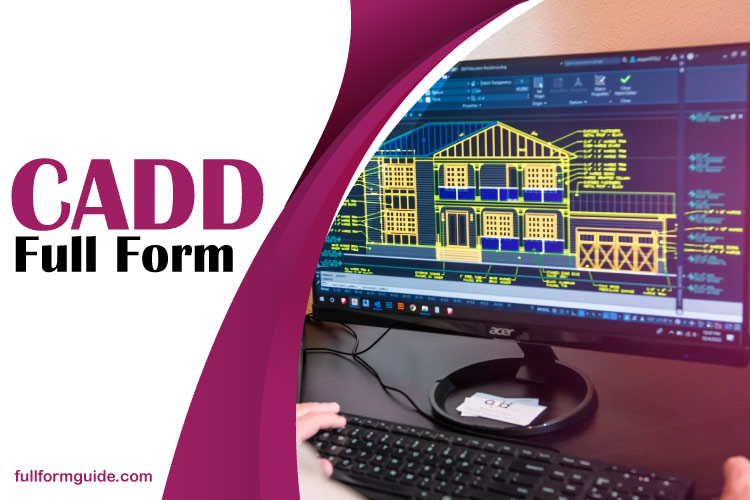
The CADD full form is Computer-Aided Design and Drafting. It refers to modern technology used by engineers, architects, and designers to create technical drawings, product models, and building structures on a computer instead of drawing by hand.
With the help of CADD tools, people can design more accurately, quickly, and with a high level of detail. This technology has become very important in industries where precision, planning, and visualization are necessary.
Why CADD Replaced Manual Drafting
In the past, draftsmen used paper, scale, geometry tools, and pencils to design machines, houses, bridges, and products. This process was slow and time-consuming. Any mistake required redrawing the entire plan.
CADD solved these issues by:
- Allowing quick editing
- Providing accurate measurements
- Saving time and effort
- Offering 3D visual representation of objects
Semantic Keywords Used: “Digital modeling,” “technical illustration,” “design automation”
CADD Full Form in the Modern World
The CADD full form is applied in almost every technical field today. It uses advanced software and digital interfaces to transform design ideas into realistic models. Popular CADD software includes:
- AutoCAD
- SolidWorks
- CATIA
- Revit
- Fusion 360
- Creo
Engineers and designers can simulate how products or structures will look and work before manufacturing starts.
Types of CADD in Different Industries
2D CADD
Used for simple drawings like floor plans, machine parts, and electrical layouts.
3D CADD
Used for realistic models, animations, and simulation testing. This is widely used in mechanical design and construction planning.
Industries That Use CADD
| Industry | How It Uses CADD |
| Architecture | Building designs, interior layouts |
| Mechanical Engineering | Machine parts, product development |
| Civil Engineering | Bridges, roads, dams plans |
| Automotive | Cars and engine modeling |
| Aerospace | Aircraft structure & simulation |
| Electrical Engineering | Circuit and wiring diagrams |
| Fashion & Jewelry | Pattern/model designing |
| Construction | Building information modeling (BIM) |
CADD allows professionals to reduce manufacturing errors and improve productivity.
Benefits of Using CADD Technology
CADD provides multiple advantages that save cost and enhance quality:
- Speed and efficiency in design
- High accuracy and precision
- Easy sharing and digital storage
- 3D view before real production
- Fewer errors in engineering and construction
- Low wastage of material and budget planning
CADD in Education and Career Growth
Students in engineering, architecture, and technical fields learn CADD as a compulsory skill. Career opportunities include:
- CAD Technician / Draftsman
- Product Designer
- Civil CAD Engineer
- BIM Modeler
- Mechanical Design Engineer
Companies give high preference to applicants with strong CADD knowledge.
Future Scope of CADD
With the rise of AI, 3D printing, VR/AR technology, and digital construction, CADD will become more advanced. Designers will build smarter, safer, and more efficient models that help industries innovate faster.
The future includes:
- Automated design suggestions
- Augmented reality visualization
- Eco-friendly and smart engineering solutions
Conclusion
The CADD full form means Computer-Aided Design and Drafting, a powerful technology that has replaced manual drawing and made modern designing easier, faster, and more precise. It supports various industries like engineering, architecture, automotive, aerospace, and many more. By improving accuracy and reducing errors, CADD continues to shape the future of technical design and innovation.