Modern video advertising moves fast. Brands launch campaigns across TikTok, Instagram Reels, YouTube Shorts, Meta Ads, ecommerce stores and landing pages almost simultaneously. Every campaign needs multiple video formats, creative variations, platform-specific edits and fast revisions while trends are still relevant. The problem is that most workflows feel fragmented.
Creators often jump between several tools just to complete one campaign. One platform handles image generation, another manages video motion, another focuses on editing and additional tools are needed for scene adjustments, consistency fixes or creative testing. That process slows production significantly.
For marketing teams running high volume campaigns, switching constantly between disconnected tools creates delays, workflow confusion and inconsistent creative output.
This is one reason why more creators and brands now use Higgsfield as a centralized production environment instead of treating AI video generation as one isolated step. The platform combines cinematic generation, motion control, character continuity, visual direction and campaign flexibility within one workflow.
For teams using an ai video generator, this creates a much more efficient production system where campaigns can move from concept to execution without constantly rebuilding the workflow across multiple platforms.
As content demand increases, integrated creative workflows are becoming far more valuable than disconnected tool stacks.
Why do modern video campaigns require so many creative variations?
Video advertising is no longer built around one final edit. Brands now create multiple campaign versions for different audiences, platforms and testing strategies. A single campaign may require:
- TikTok vertical videos
- Instagram Reels
- YouTube Shorts edits
- Paid advertising creatives
- Product showcase clips
- Retargeting video variations
- Influencer-style edits
Each platform behaves differently, which means content often needs separate pacing, framing, motion style and visual presentation.
At the same time, teams constantly test new creative directions to improve performance. This creates huge production pressure because campaigns rarely stop after one version. Marketing teams now need scalable workflows capable of handling continuous visual adaptation without slowing campaign timelines.
Why do disconnected creative tools slow ad production down?
Most video production workflows still depend on several disconnected platforms. A creator may generate visuals in one tool, animate scenes somewhere else, export files into editing software, fix inconsistencies manually and then move content into another platform for revisions or resizing. That process creates several problems.
First, production becomes slower because every platform switch interrupts workflow momentum.
Second, visual consistency becomes harder to maintain because scenes move between separate systems with different rendering styles and generation behaviors. Third, revisions become more complicated because creators often need to restart parts of the process repeatedly.
During fast moving campaigns, these delays become a major issue.
Social trends move quickly, product launches have tight timelines and advertising campaigns often require rapid creative updates based on performance data. Switching constantly between disconnected tools limits how fast teams can actually respond.
How does Higgsfield simplify full campaign production?
Higgsfield approaches AI video differently by focusing more heavily on complete creative workflows instead of isolated generation steps.
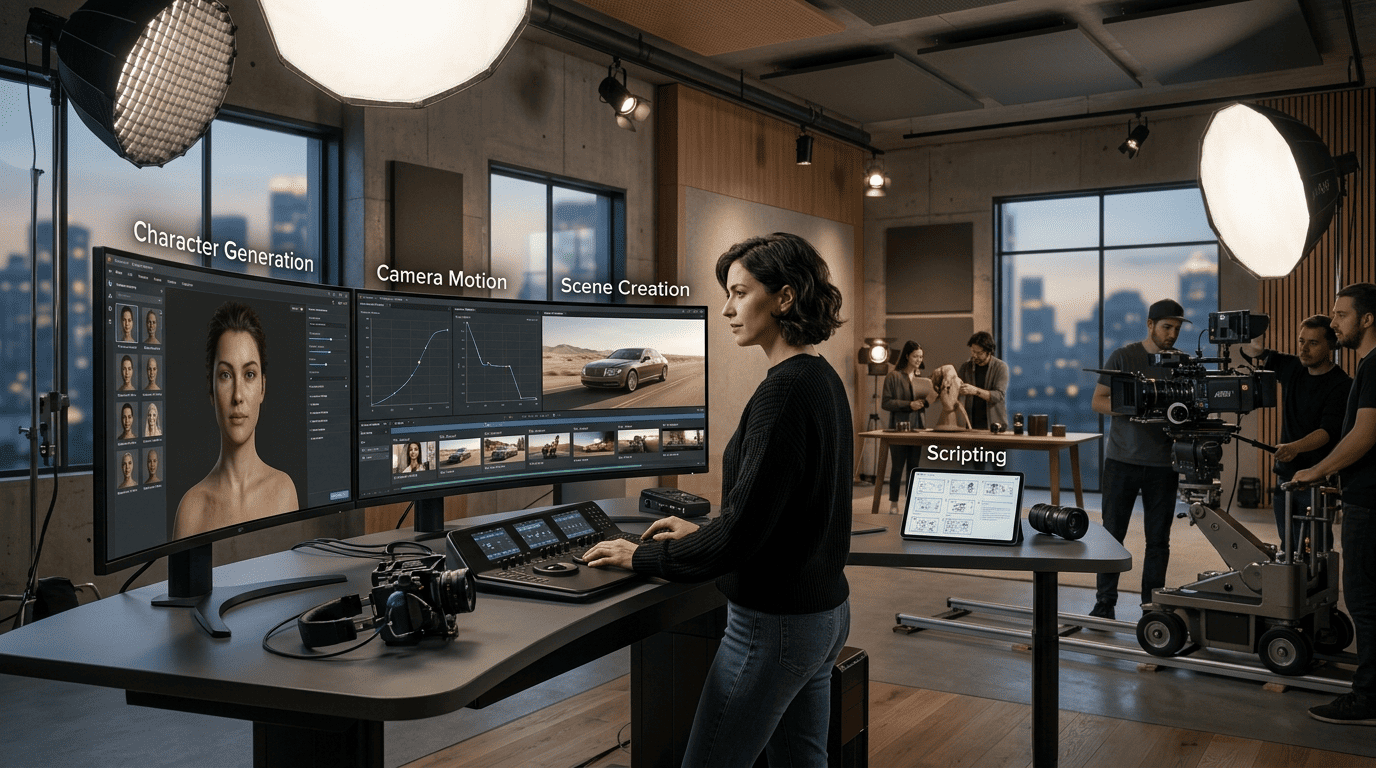
Instead of functioning like a basic animation tool, the platform gives creators stronger control over cinematic direction, motion systems, scene consistency and visual storytelling within one environment. This allows teams to handle several campaign stages without rebuilding the workflow constantly.
For example, creators can:
- Generate cinematic visuals
- Maintain recurring character consistency
- Control camera movement
- Adjust scene composition
- Experiment with cinematic motion
- Build platform-ready video sequences
All within the same creative system.
For teams using an ai video generator regularly, this creates a far smoother production process because content development stays visually connected from concept to final campaign output.
Why are agencies moving toward integrated AI production workflows?
Creative agencies manage several campaigns simultaneously across multiple brands and industries. One client may need cinematic storytelling while another requires fast moving social ads. Some campaigns focus on ecommerce performance while others prioritize visual branding and audience engagement. Managing all these workflows through disconnected tools quickly becomes inefficient.
Higgsfield helps agencies reduce workflow fragmentation by supporting several creative functions inside one platform ecosystem. This improves production speed because teams spend less time exporting, rebuilding and correcting assets across separate systems.
An ai video generator with integrated cinematic control also helps agencies maintain stronger visual consistency throughout campaign development. That becomes especially valuable when campaigns require continuous creative testing and frequent revisions across different formats.
Why does centralized workflow improve campaign consistency?
Consistency becomes difficult when campaigns move through too many disconnected platforms. One tool may generate slightly different visual styles. Another may alter motion behavior. Editing adjustments may change pacing or framing unexpectedly.
Over time, campaigns start feeling visually fragmented. Higgsfield helps reduce these problems by keeping more of the production workflow inside one creative environment.
This improves alignment across:
- Motion behavior
- Camera dynamics
- Character continuity
- Cinematic atmosphere
- Scene composition
- Visual pacing
The ai video generator workflow becomes much more reliable because creators maintain stronger creative consistency throughout the entire campaign cycle. That consistency matters heavily for fashion brands, luxury campaigns, social storytelling and performance advertising where visual identity strongly affects audience perception.
Why are social-first marketers adopting faster production systems?
Social content cycles move extremely fast now. A trend may stay relevant for only a few days before audiences move to something new. Brands that react slowly often miss the visibility window entirely. This is why production speed matters almost as much as visual quality.
Marketers need workflows capable of producing high-quality video content quickly without creating bottlenecks between creative stages. Higgsfield supports this by helping teams generate, refine and adapt cinematic content within one production system instead of relying on fragmented workflows.
The ai video generator process becomes more flexible for social-first marketing because creators can move faster from idea testing into campaign execution. That speed becomes especially valuable during trend-driven campaigns, product launches and seasonal promotions where timing directly affects performance.
Why does creative flexibility matter in modern advertising?
Modern advertising depends heavily on experimentation. Brands constantly test different hooks, pacing styles, visual directions and campaign aesthetics to understand what performs best across audiences and platforms. Rigid workflows make this difficult because every adjustment increases production complexity. Higgsfield helps teams experiment more efficiently by giving creators stronger cinematic control and workflow flexibility inside one system.
For example, marketers can quickly compare:
- Different motion styles
- Camera behaviors
- Character-driven concepts
- Cinematic visual directions
- Social-first creative formats
Without rebuilding the production process repeatedly across multiple tools. That flexibility helps campaigns evolve much faster based on performance data and audience response.
Why are integrated AI video workflows becoming the future of campaign production?
Video marketing is becoming more demanding every year. Brands need higher content output, faster adaptation, stronger cinematic quality and more platform-specific creative variation than ever before.
Traditional fragmented workflows often cannot support this level of production efficiently. This is why creators and marketing teams increasingly rely on integrated systems like Higgsfield instead of isolated generation tools.
An ai video generator built around complete creative workflows gives teams more control over cinematic direction, motion consistency, campaign flexibility and production speed without constantly switching between disconnected platforms.
As digital advertising becomes even more content driven, centralized AI production systems will likely become one of the biggest advantages for brands trying to scale video campaigns efficiently across multiple channels.