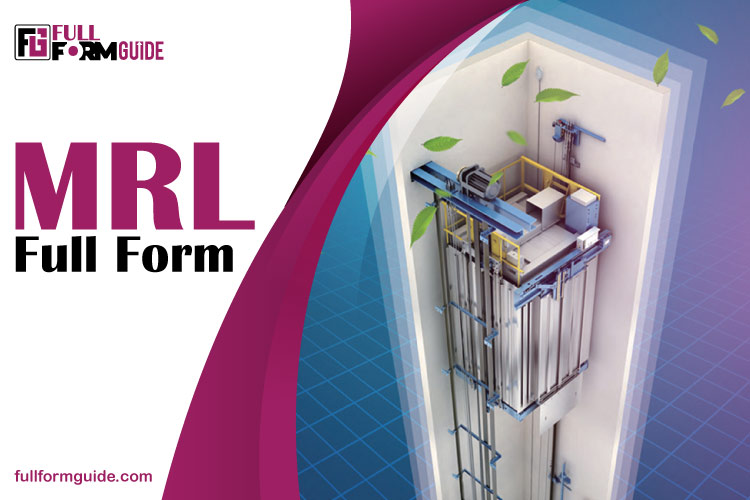
The MRL full form is Machine Room Less, a revolutionary elevator design that eliminates the need for a traditional machine room above or beside the lift shaft.
Instead, the machinery and control systems are placed within the hoistway itself, making it a space-saving and energy-efficient solution used in modern buildings worldwide.
This design innovation marks a major step forward in the construction and technology industries, allowing architects to optimize building space and reduce overall construction costs.
Understanding the Concept of MRL Elevators
Traditional elevators require a separate machine room to house motors, controllers, and drive systems. However, Machine Room Less (MRL) elevators integrate all these components directly into the elevator shaft or at the top of the hoistway.
This means less structural work, easier maintenance, and greater design flexibility — especially useful for high-rise apartments, offices, and malls where space is limited.
How MRL Technology Works
In an MRL elevator system, the gearless traction machine is mounted inside the shaft. The control panel is usually installed on a nearby floor or within the door frame. The system uses steel ropes and counterweights, powered by energy-efficient permanent magnet motors (PMMs).
Because the drive components are compact and lightweight, MRL elevators consume less energy and require fewer parts, resulting in smoother operation and lower noise levels.
Advantages of MRL Elevators
The adoption of MRL elevators is growing rapidly due to several benefits:
- Space Efficiency: No need for a separate room for equipment.
- Lower Construction Cost: Reduces building complexity and materials.
- Energy Savings: Uses efficient gearless systems and consumes less power.
- Safety and Reliability: Equipped with modern control and braking systems.
- Eco-Friendly: Uses recyclable materials and less oil-based machinery.
These benefits make MRL elevators the preferred choice for modern architectural designs and green building initiatives.
Other Established Full Form of MRL
Beyond elevators, MRL appears across many fields:
- Maximum Residue Limit (food safety), Minimum Reporting Level (analytical chemistry), and Maximum Recommended Level (nutrition) in compliance and lab contexts.
- Manufacturing Readiness Level, Market Risk Limit, and Master Requirements List in engineering, finance, and program control.
- Materials/Medical Research Laboratory in academia and healthcare.
- Magnetic Resonance Lymphography and Magnetic Resonance Lithography in medical imaging and nanofabrication.
- Media Resource Locator and Master Reference Library in software and IT asset management.
- Minimum Required Level/Limit in inventory, QA, or performance thresholds.
Applications of MRL in Modern Infrastructure
From commercial towers to residential complexes, MRL elevators have transformed vertical mobility. Architects now design buildings with greater flexibility since they don’t need to allocate space for machinery rooms.
In addition, real-estate developers prefer MRL systems because they enhance the aesthetic appeal and energy performance of structures, aligning with modern sustainability standards.
Safety and Maintenance in MRL Systems
One of the concerns with MRL elevators was initial maintenance accessibility. However, new designs include easy service panels, allowing technicians to perform repairs safely from within the shaft area.
Safety standards from organizations like EN 81-20/50 ensure that MRL systems meet the same rigorous testing and reliability levels as conventional elevators.
Future of MRL Technology
The next generation of MRL elevators will integrate IoT (Internet of Things) and AI-based predictive maintenance, allowing real-time performance monitoring. This means fewer breakdowns, faster diagnostics, and longer equipment life.
Moreover, MRL designs are now being adapted for smart cities, where energy efficiency, compact design, and sustainability are key priorities.
Conclusion
To sum up, the MRL full form, Machine Room Less, represents a breakthrough in elevator engineering and urban design. It eliminates the need for extra space, improves energy efficiency, and provides smooth, quiet, and safe operation.
While MRL can also mean other technical or scientific terms in different industries, its most impactful usage remains in the elevator technology sector, symbolizing innovation and sustainability in modern infrastructure.