Residential walls encounter a range of surface issues throughout their lifespan. Construction techniques leave taped seams and fastener marks. Structural settling produces small cracks. Daily activity from furniture movement, door swings, and incidental contact creates dents and scuffs. These flaws remain minor in most cases, yet they become noticeable on flat surfaces where light reflects uniformly.
How Texture Patterns Mask Underlying Irregularities
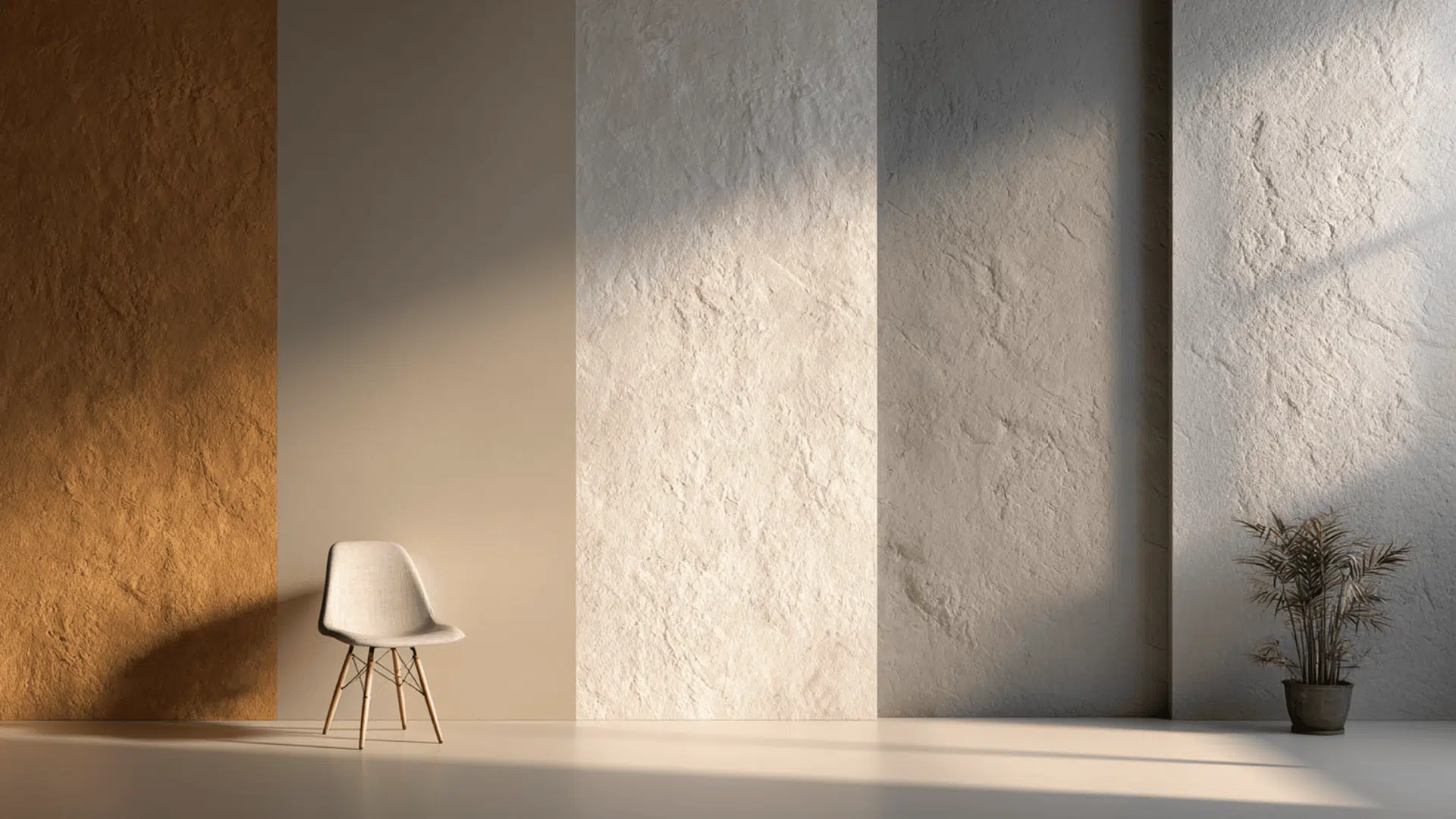
Textured finishes address many of these conditions without requiring perfect underlying preparation. The irregular surface profile interrupts consistent light reflection. Peaks and valleys generate varied shadows that draw the eye away from isolated irregularities. As a result, minor depressions, raised joints, and patch boundaries lose visual prominence once the texture covers the area.
This masking effect operates through basic optics rather than material concealment. Smooth drywall highlights every variation because incident light bounces evenly across the plane. Textured compound, by contrast, scatters light in multiple directions, a principle also employed in wall texture paint that creates comparable surface variations for light diffusion. The resulting micro-shadows soften contrast between damaged and undamaged sections. Heavier patterns, such as knockdown finishes, provide stronger disruption than lighter options like orange peel. Both still require initial repair of large holes or loose material, but they tolerate small inconsistencies that would demand extensive sanding on a level-five smooth finish.
Contributions to Surface Resilience and Wear Resistance
The application of texture compound adds a distinct layer over the drywall substrate. This layer distributes minor impact forces across a broader area rather than concentrating stress at a single point. Consequently, light scuffs and shallow dents produce less pronounced surface disruption than they would on bare drywall or a thin paint film alone.
Everyday contact in occupied spaces rarely causes structural failure. Instead, it generates cosmetic marks that accumulate over time. On textured walls these marks integrate into the existing pattern. A scuff that stands out sharply against a flat plane blends into the surrounding variations on a knockdown or orange-peel surface. The wall therefore maintains an acceptable appearance for longer intervals between interventions.
Seasonal movement in framing members can reopen hairline cracks. Textured finishes allow these cracks to recede visually into the pattern. Homeowners avoid the cycle of repeated filling and sanding that smooth surfaces often demand in regions with pronounced humidity swings. The net outcome is reduced frequency of visible deterioration even when underlying conditions remain unchanged.
Advantages in Maintenance and Repair Processes
Routine cleaning differs between surface types. Flat walls display every speck of dust or fingerprint because the surface offers no recesses to interrupt visibility. Textured walls allow settled particles to occupy the low points of the pattern. Marks therefore remain less conspicuous during normal viewing angles and distances. This property extends the interval between full wall washing in many households.
Repair work benefits substantially from the same visual integration. A damaged section receives new compound, texture matching, and paint. The boundary between old and new material disappears into the overall pattern without the need to refinish an entire wall plane. Professional estimates frequently note that restoration on textured surfaces requires less labor and produces fewer visible transitions than equivalent work on smooth drywall. The difference arises because smooth repairs demand precise feathering and multiple coats to avoid telegraphing the patch under glancing light.
Long-term ownership costs reflect these differences. Fewer full-surface interventions accumulate savings in materials and contractor time. The initial application of texture also shortens the finishing stage during new construction or renovation. Installers can achieve acceptable results with standard taping rather than multiple skim coats and extensive sanding required for level-five smoothness.
Considerations for Texture Selection and Application
Different patterns suit different conditions. Orange-peel texture delivers subtle variation suitable for most living areas and high-traffic corridors. Its fine dimpling conceals minor drywall flaws while remaining relatively straightforward to match during localized repairs. Knockdown texture creates larger flattened islands that accommodate more significant surface variations and provide stronger masking in rooms with frequent impacts.
Skip-trowel and similar hand-applied finishes offer deeper relief for spaces where existing irregularities exceed typical levels. These require greater applicator skill yet deliver corresponding improvements in concealment. Popcorn textures, once common on ceilings, collect dust in their deeper recesses and have declined in favor for walls where regular cleaning occurs.
Preparation remains essential regardless of chosen pattern. Major structural defects, water damage, or loose substrate must receive correction before texturing begins. Texture does not replace proper taping or structural repair; it improves tolerance for the small deviations that persist after standard finishing. Professional application ensures consistent density and pattern across the surface, which supports both the masking function and future repair compatibility. Detailed coverage of textured wall applications is available through established home improvement platforms.
Overall Performance in Occupied Homes
Over extended periods, textured walls in occupied homes demonstrate sustained performance under normal use. The combination of optical masking and integrated repair capability reduces the cumulative visual impact of ordinary wear. Property owners gain a finish that accommodates the realities of residential occupation while preserving the integrity of the underlying drywall system for years beyond what flat surfaces typically achieve under identical conditions.