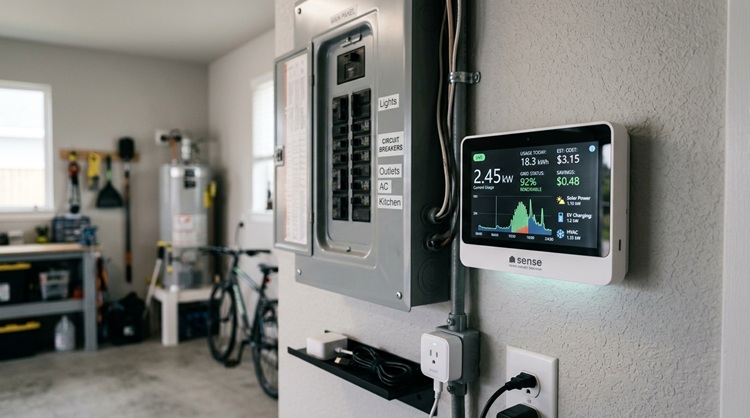
During an outage, a beautiful energy dashboard is less important than a refrigerator that stays cold and a router that keeps working. Backup power is where home energy monitoring has to become practical. It needs to answer a basic question: what gets power, for how long, and from which source?
Whole-home backup does not always mean every appliance can run normally forever. It means the home has a plan for keeping the right loads alive.
Backup Monitoring Has a Different Job
On a normal day, monitoring is about cost and efficiency. During an outage, it is about priorities. The system should show battery state of charge, solar recharge, current load, and estimated runtime in a way that a tired homeowner can understand quickly.
A backup load is any circuit or device intended to remain powered when the grid is unavailable. Critical loads might include refrigeration, lighting, internet, garage access, medical devices, and selected outlets. Large comfort loads, such as central air or electric heating, need more careful planning.
This is also why backup design should not begin with square footage. Two homes of the same size can behave very differently. One may only need a quiet essential-load setup, while another may need to support well pumps, sump pumps, home offices, or temperature-sensitive equipment.
This is where whole-home backup control becomes more valuable than a monitor-only setup. It can support load decisions, not just show that the battery is draining.
Fast Transfer Is Only Part of the Story
Many homeowners focus on switchover time, and for good reason. If the transfer is slow, sensitive devices can shut down. Sigenergy’s product guidance for LoadHub highlights 0 ms switching, a useful feature for keeping backup transitions smooth.
But speed alone does not solve the energy budget. A battery that powers every large load at once may empty too quickly. Good backup management should decide which loads are allowed, which are delayed, and which can be shed if battery level drops.
A useful backup dashboard should therefore feel a little different from a normal energy dashboard. It should surface reserve, runtime, solar recharge, and load priority first. Historical charts can wait until the outage is over.
The U.S. Department of Energy has long described demand response and load control as ways to shift or reduce electricity use when the grid is stressed. The same thinking applies inside a home during an outage: not every load deserves the same priority.
What to Check Before an Outage
A homeowner should know three things before the lights go out:
· Which circuits are backed up.
· Which loads are controllable.
· How long the battery can support essential use under realistic conditions.
Solar recharge changes the answer during the day, but it should not be treated as guaranteed. Clouds, smoke, snow, and short winter days can all reduce production.
The strongest backup plan combines monitoring, switching, and load control. A product such as Sigen LoadHub fits that role because it is built around energy flow management and backup behavior rather than simple usage reporting.
In a blackout, the best energy monitor is the one that helps the home make calm decisions before the battery is already low.